Text: 2 Kings 4:8–37
Theme: Discernment recognises God’s presence; honour prepares a place for His power.
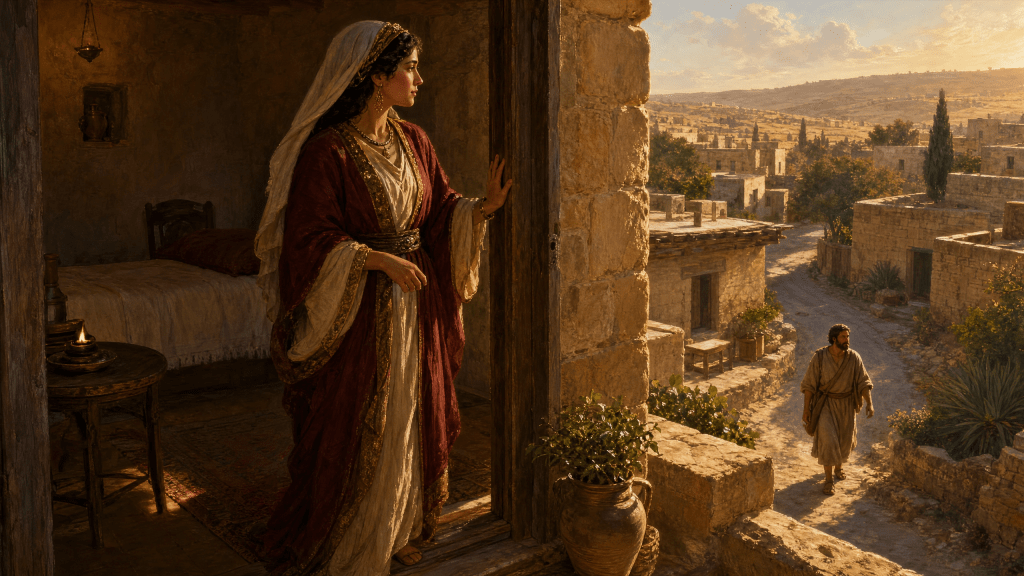
The Shunamite woman in 2 Kings 4:8 is known in Scripture only as “a great woman.” Not because of her wealth, though she had it. Not because of her status, though she carried it. She is called great because of her extraordinary discernment.
She sees Elisha passing through Shunem. He is not performing miracles. He is not preaching sermons. He is not announcing himself as a prophet. He is simply passing through. But she perceives something that everyone else entirely misses. She tells her husband, “I perceive this is a holy man of God.”
Discernment is the rare ability to recognise God’s presence before anything spectacular happens.
Honour Without Expectation
Her discernment moves her to honour without being asked. She does not wait for Elisha to request help. She does not wait for a sign. She does not wait for a need. She simply invites him to eat and opens her home.
But true discernment does not stop at hospitality; it builds. She says to her husband, “Let us build a small upper room for him…a bed, a table, a chair, a lamp.”
She builds a room with absolutely no promise attached, no prophecy in view, and no miracle expected. This is the definition of honour: creating space for God before you need anything from Him. Her discernment recognises the grace on Elisha, and her honour makes physical room for that grace to rest.
Opening Doors You Didn’t Knock On
Eventually, Elisha asks, “What can be done for her?” She asks for nothing. She expects nothing. She is entirely content. But honour never goes unrewarded.
Elisha prophesies, “About this time next year, you will embrace a son.” She did not ask for a child. She did not pray for a child. She did not even dare to hope for a child anymore. But honour draws blessings you did not even think to request. Her discernment opened the door, and her honour invited the miracle in.
The Room Honour Built
Years later, the child collapses in the field and dies in her lap. Her miracle dies. Her promise ends. Her joy is buried.
But in the middle of unimaginable grief, she does something profound: she carries the boy directly to the room she built in honour. She lays him on the prophet’s bed – the very bed she prepared before she ever needed a miracle. Discernment built the room. Honour furnished it. Faith laid the boy there. The place she honoured God becomes the exact place God will restore life.
The Confidence of “It Is Well”
She rides urgently to Mount Carmel. Elisha sees her coming and sends Gehazi to ask, “Is it well with you? Is it well with your husband? Is it well with the child?”
She answers, “It is well.”
She does not say this because the child is alive. She says it because she knows exactly where she left him, and she knows exactly where to take her pain. Honour produces confidence. Confidence produces faith. Faith produces miracles.
Elisha returns with her. He goes into the room she built. He stretches himself over the child, prays, and intercedes. The child sneezes seven times and opens his eyes. The room she built in honour becomes the stage for resurrection.
A Word to the Reader
Maybe you are like this woman today. Maybe you have sensed God moving quietly in your life. Maybe you have honoured Him in hidden, uncelebrated ways. Maybe you have built rooms no one else sees, creating space for His presence without asking for anything in return.
Her story whispers a powerful truth into your quiet obedience: God never overlooks honour. God never forgets discernment that acts. God never ignores the rooms you build for Him. The space you prepare today in quiet honour may be the exact space where God resurrects something tomorrow.
Prayer
Lord, sharpen my discernment to recognise Your presence even when it is quiet. Teach me to honour You in ways that prepare room for Your power. Let the spaces I build in obedience and honour become the places where You move, restore, and resurrect. Amen.

 Devotional
Leave a comment