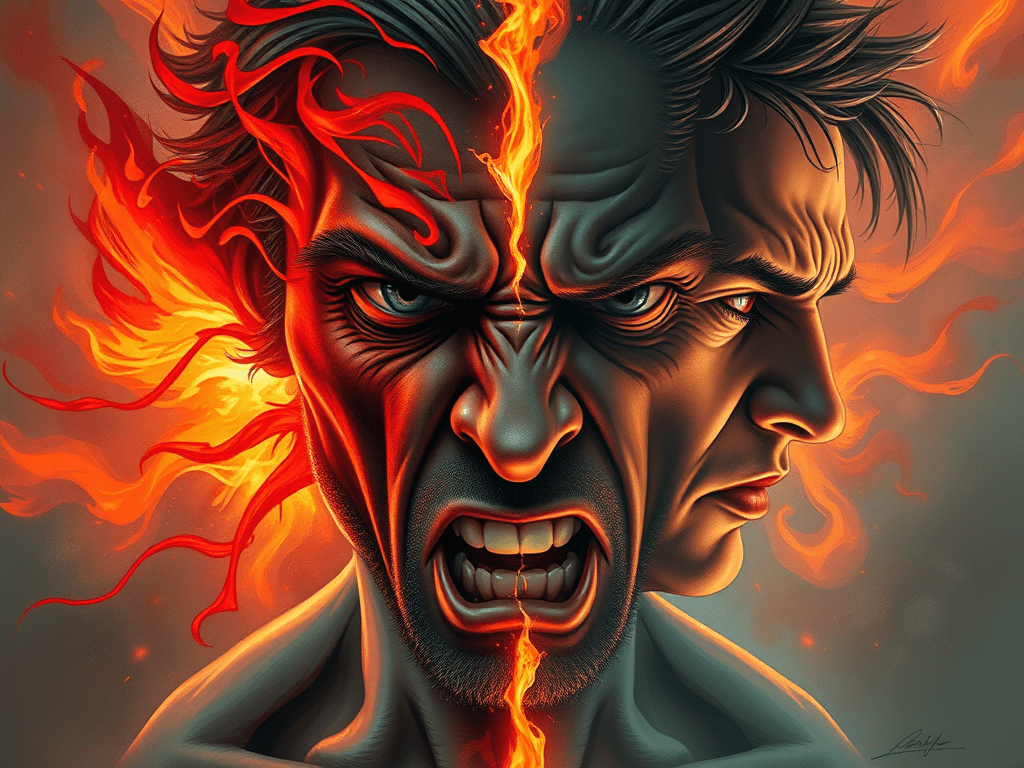
The Toll You Do Not See
Anger does not affect your relationships alone, it affects your body.
It is not just a feeling. It is something your nervous system experiences, your bloodstream carries, and your muscles remember. Scripture says in Proverbs 14 vs 30, “A heart at peace gives life to the body.” That is not symbolic language. It is practical truth.
When anger becomes frequent, the body begins to pay for what the heart refuses to resolve.
The Physiology of Anger
When you feel provoked, your brain activates its alarm system. Stress hormones such as adrenaline and cortisol are released. Your heart beats faster. Your breathing shortens. Your jaw tightens. Blood flow shifts away from thoughtful reasoning toward rapid reaction. The body prepares for confrontation.
This response is useful in real danger. It is destructive in everyday conflict.
Most of the situations that trigger us are not life-threatening. They are moments of disrespect, delays, miscommunication, disappointment, fatigue etc. Yet the body reacts as though survival is at stake.
Over time, repeated anger trains the nervous system. You become more easily triggered. Smaller issues produce stronger reactions. What once required serious pressure to surface now requires very little.
The Bible instructs, “Do not let the sun go down on your anger.” When anger lingers, the stress response lingers. Sleep becomes lighter. Rest becomes incomplete. Irritability increases. The body never fully resets.
What is not released emotionally is stored physically.
The Hidden Physical Cost
Consider Kelvin, who prides himself on being intense and driven. At work, he reacts sharply when deadlines are missed. At home, he feels constantly tense. He struggles with headaches and high blood pressure. He assumes it is workload. But his body has been living in constant fight mode.
Or think of Miriam, who rarely raises her voice. She avoids confrontation and swallows frustration. She calls herself peaceful. Yet she carries deep resentment. Over time, she experiences chronic fatigue and tightness in her chest. Suppressed anger does not disappear. It settles.
Explosive anger damages outwardly. Suppressed anger damages inwardly. Both take a toll.
Proverbs warns that a hot-tempered person stirs up conflict. But conflict is not only external. There is internal conflict as well. The body was not designed to live in continual agitation.
How Anger Becomes Automatic
Repeated reactions create patterns. The brain strengthens whatever it practices. If anger becomes your frequent response, the neural pathway associated with it becomes efficient. The cycle shortens. Trigger. Surge. Reaction.
You may begin to say, “That is just how I am.” But often it is simply what you have rehearsed.
Imagine a father who responds to noise with irritation. At first, it happens occasionally. Over time, it becomes predictable. The children learn to monitor his mood before speaking. The atmosphere shifts from relaxed to cautious.
Or consider a ministry leader who reacts strongly to mistakes. Volunteers perform carefully, but without confidence. Creativity decreases. Joy decreases. The mission continues, but the culture grows tense.
Anger changes environments. It reduces emotional safety. And without safety, relationships cannot fully flourish.
Reflections
Ask yourself honestly:
- What does my body feel like when I am angry?
- Do I carry tension long after the moment has passed?
- Have I normalized stress that is actually unresolved anger?
Picture a young professional who checks emails late at night. A critical message arrives. His chest tightens. He cannot sleep. By morning, he is already defensive before the conversation begins.
Imagine a wife who replays a hurtful comment in her mind for days. She does not shout. But her tone changes. Her body remains tense. Her silence communicates distance.
Anger does not have to be loud to be costly.
The Invitation
The fruit of the Spirit includes self-control for a reason. Not because emotions disappear, but because they can be governed.
When you feel the surge, pause. When your breathing shortens, slow it. When words rush forward, delay them. These small acts allow wisdom to re-engage. They calm the nervous system. They weaken old patterns.
Peace is not passive. It is practiced.
Just as anger can be reinforced, restraint can be strengthened. The body can relearn calm. The mind can relearn patience. The heart can relearn trust.
Destiny requires endurance. Endurance requires health. Health requires peace.
A heart at peace truly gives life to the body. And a body governed by peace is far more capable of carrying the purpose God has placed upon your life. Do not let unresolved anger ruin this.
 Devotional
Leave a comment