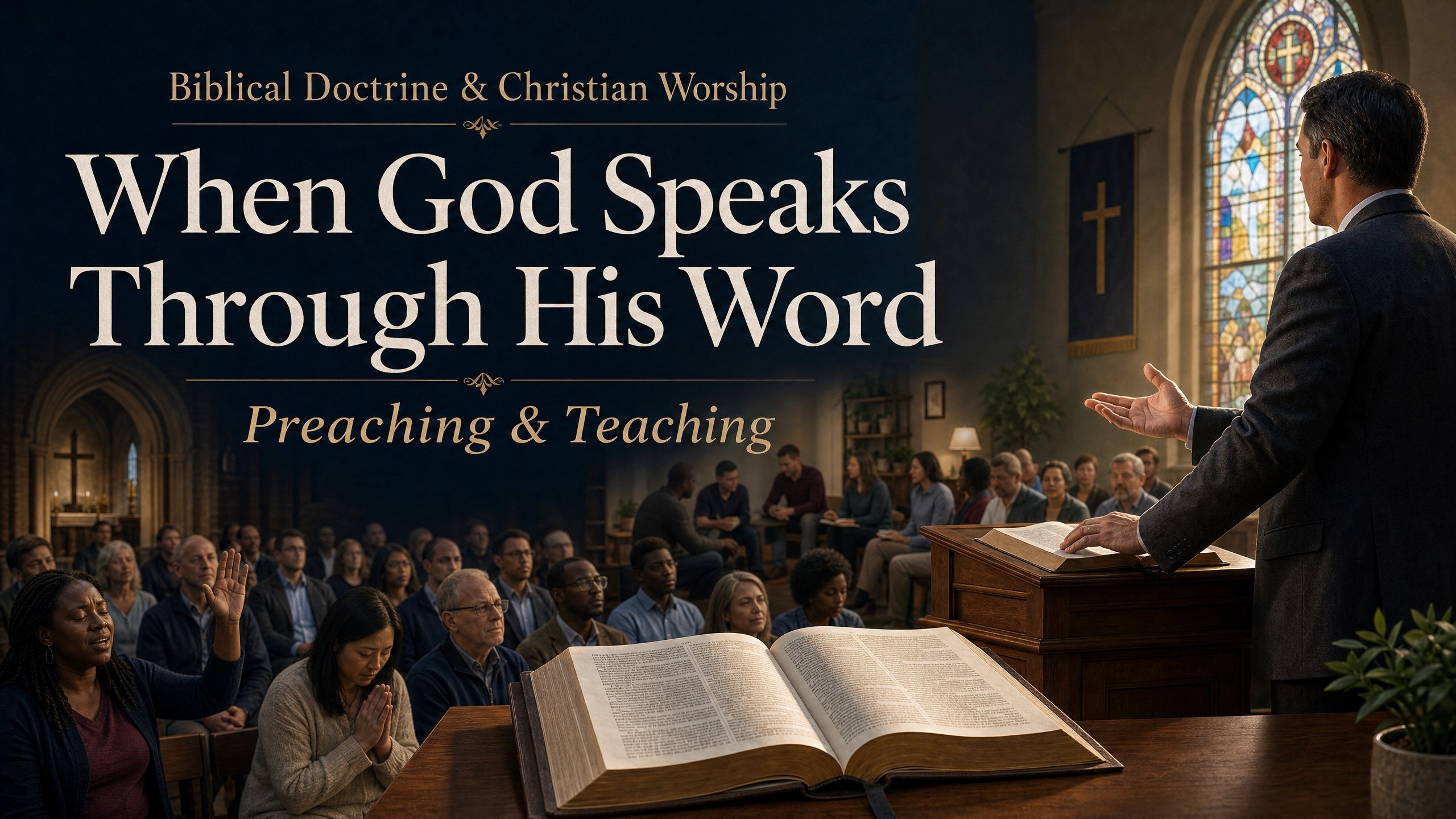
On a wet Sunday morning in Nairobi, Leah slipped into the back row of a crowded church with rain still on her sleeves. She had almost stayed home. The week had been heavy. Her prayers felt thin. Her questions felt louder than her faith.
The choir finished. The room settled. The pastor walked to the pulpit, opened his Bible, and said, “Let us hear what the Lord says to His people.
Not what the preacher preferred. Not what the culture approved. Not what the crowd wanted….What the Lord says.
That moment happens across the world in many forms. In a cathedral, a priest gives a short homily from the lectionary. In a Baptist chapel, a pastor walks verse by verse through Romans. In a Pentecostal tent, a preacher proclaims Christ with urgency while the congregation answers aloud. In a house church, a teacher explains Scripture quietly over plastic chairs and shared food.
The settings differ, but the need is the same. The church does not gather only to hear a gifted speaker. The church gathers to be addressed by God through His Word.
Scripture is clear about this ministry. Paul tells Timothy, “Preach the word” (2 Timothy 4:2). Ezra and the Levites read from the Book of the Law and “gave the sense” so the people could understand (Nehemiah 8:8). Paul says faith comes from hearing the word of Christ (Romans 10:17). He also reminds the Corinthians that Christian proclamation is centred on “Christ crucified” (1 Corinthians 1:23), not human cleverness. Preaching is not motivational speaking with Bible verses attached. It is the Word opened, Christ proclaimed, sin exposed, grace announced, and obedience called forth.
Teaching and preaching belong together, but they are not identical. Teaching explains truth so the church can understand. Preaching proclaims truth so the church must respond. Teaching builds foundations. Preaching presses the claim of God upon the conscience. This is why the risen Christ gives pastors and teachers to equip the saints (Ephesians 4:11 to 12), and why elders must be able to teach (1 Timothy 3:2).
Historically, the church has carried this ministry in different ways. In early Christian gatherings, Scripture was read and explained, continuing the pattern of synagogue worship and apostolic instruction. Over time, liturgical churches developed homilies shaped by the church calendar and assigned readings. Their strength is continuity, reminding believers that we do not invent the faith each Sunday. Their danger is that preaching can become too brief or too detached from the daily struggles of the people.
Reformed and Baptist traditions often place preaching at the centre of the service, with extended exposition and doctrinal clarity. Their strength is depth and careful handling of Scripture. Their danger is treating information as transformation, as though hearing more automatically means obeying more.
Pentecostal and charismatic traditions often preach with strong expectation of encounter, response, healing, repentance, and mission. Their strength is urgency. Their danger is allowing personality, volume, or spiritual language to outrun the text.
Evangelical and non-denominational churches often preach practically, using stories, application, and contemporary issues. Their strength is accessibility. Their danger is reducing the sermon to advice for a better week rather than submission to the living God.
Culture also shapes delivery. Some churches expect silence while the Word is preached. Others answer with “Amen.” Some sermons last twenty minutes, others an hour. Some preachers use manuscripts, others speak freely. These are not the deepest issue. Culture may shape the vessel, but Scripture must govern the message.
What does God intend? He intends preaching and teaching to feed His people, not impress them. He intends the Word to correct error, comfort the weary, confront sin, form doctrine, strengthen faith, and send the church into obedience. The preacher is not the centre. The pulpit is not a stage. The sermon is not a performance.
It is a holy stewardship.
That Sunday, Leah did not remember every sentence. But she remembered one verse: “Come to me, all who labor and are heavy laden, and I will give you rest” (Matthew 11:28). She wrote it on the back of the bulletin and carried it into Monday.
That is faithful preaching at its best. Not noise. Not display. Not opinion.
God’s Word finding a person and leading them home.
Reflection Questions
1.What kind of preaching has most shaped your faith, and why?
2.Does your church value teaching, proclamation, or both together?
3.Do you listen to sermons mainly for information, encouragement, correction, or obedience?
4.Where might your tradition’s preaching style be strong, and where might it need growth?
5.How can you prepare your heart before the Word is preached?
Prayer
Lord, thank You for speaking through Your Word. Give Your church preachers and teachers who are faithful, humble, courageous, and compassionate. Protect us from empty opinion, shallow advice, and performance. Open our ears, soften our hearts, and make us people who hear and obey. Let Christ be revealed, faith be strengthened, and lives be formed for Your glory. Amen.
Leave a Reply