Core Texts: Matthew 13; Matthew 25
Theme: God will one day reveal what is genuine. This truth is not meant to terrify, but to awaken us to authenticity, love, and hope.
The Day the Truth Comes Out
There are moments when truth becomes impossible to hide. A teacher returns graded exams. A mechanic opens the bonnet and sees how bad the engine is. At harvest, a farmer sees which plants bore grain and which were weeds.
Sorting brings clarity and protection.
Jesus used three parables to show that God will one day reveal what was real, what was false, what was fruitful, and what was empty. He did not teach this to frighten us. He taught it to awaken us and invite us into a life that is genuine.
What Grew, What Gathered, What Loved
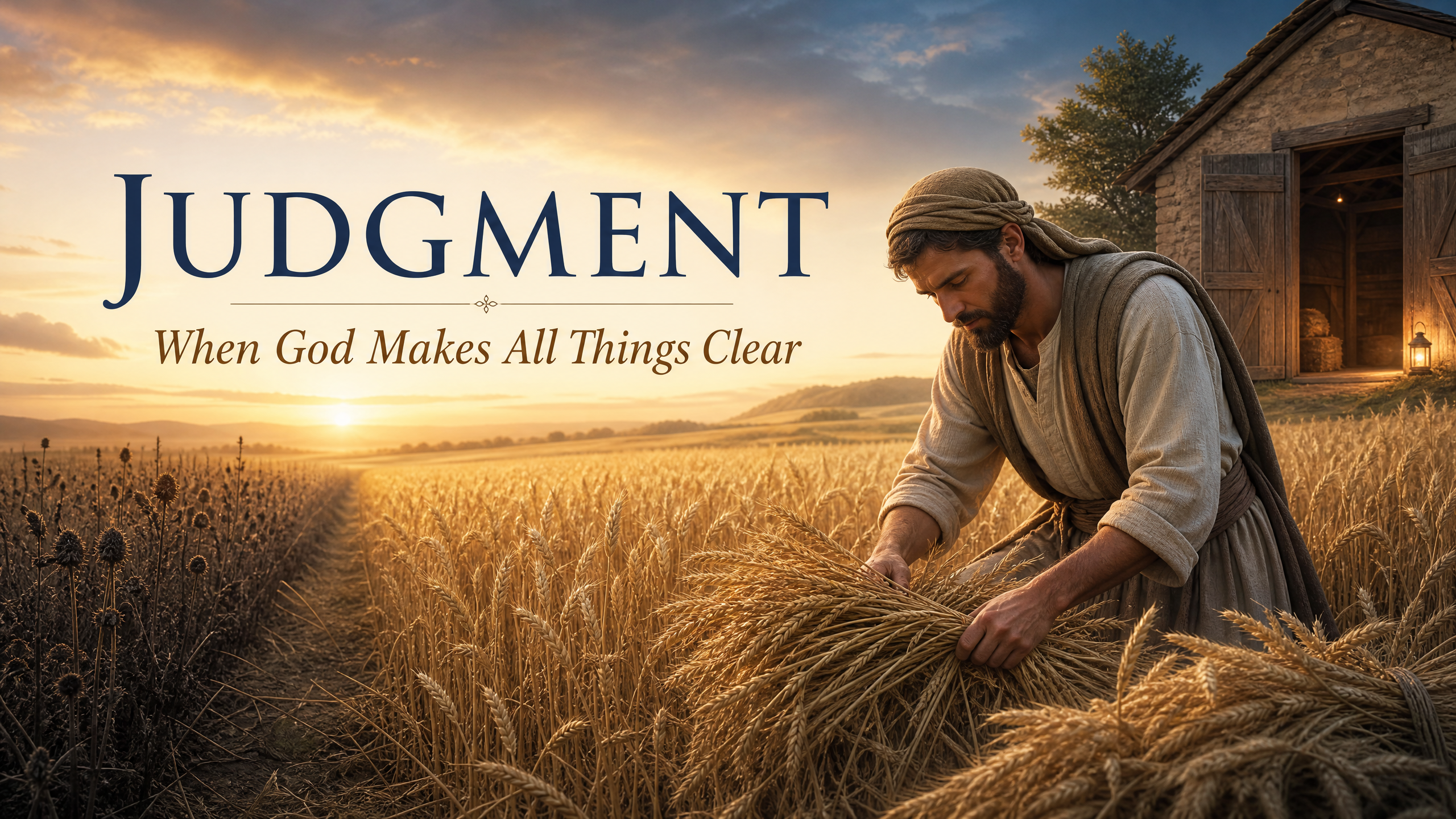
First, Jesus told the parable of the Wheat and the Tares. A farmer plants good seed, but an enemy secretly scatters look-alike weeds. For a long time, the same field, soil, sunlight, and rain conceal the difference.
When grain appears, reality is revealed. The farmer gathers the wheat and removes the weeds. Jesus’ message is sober: God sees the difference between genuine faith and mere proximity, even when we cannot (Matthew 13:24–30).
Then Jesus spoke of a Net cast into the sea. It gathers every kind of fish as it moves through the water. Only on shore does the sorting begin. Jesus said the Kingdom gathers all kinds of people, but God will reveal what is genuine (Matthew 13:47–50).
Finally, Jesus described the Sheep and the Goats. A shepherd separates animals that may graze together yet live very differently. Jesus said the Son of Man will do the same.
The separation will not rest on appearance or religious activity, but on love expressed: feeding the hungry, welcoming the stranger, caring for the sick, visiting the prisoner, and clothing the vulnerable. The sheep embodied Kingdom compassion; the goats never did. Judgment reveals what love produced – or failed to produce (Matthew 25:31–46).
Judgment Reveals What Was True All Along
Judgment is revelation, not surprise. The wheat was wheat all along. The weeds were weeds. The fish were what they were, and the sheep and goats lived differently. Judgment does not change reality; it exposes it.
Judgment is righteous and not a random act. God does not sort by popularity, reputation, or religious performance. He sees the heart, obedience, and love.
Judgment protects what is good. The farmer gathers the wheat. The fishermen preserve the good fish. The shepherd protects the sheep. God’s judgment preserves what is faithful, surrendered, and transformed.
Judgment is about readiness, not fear. Jesus told these parables to prepare His followers. For those who belong to Him, judgment is not the end of hope; it is the moment hope is fulfilled.
What Is God Revealing in You?
These parables invite an honest heart check. Am I wheat, growing in truth – or merely standing in the field? Is my faith visible in love, or am I content to remain unchanged?
This is not about perfection, but authenticity: not earning salvation, but living the life it produces.
Reflection Questions
- When you think about God’s final clarity, do you feel fear or hope? Why?
- Are you relying on religious proximity rather than genuine transformation?
- How does the parable of the Sheep and Goats challenge your understanding of spiritual maturity?
Prayer Points
Lord, reveal what is true in me. Make me wheat, not a weed. Father, make me a sheep who loves practically, not someone who merely pretends. Holy Spirit, purify my heart, align my life, and prepare me for Your Kingdom with joy and truth. In Jesus’ name. Amen.
Your Invitation: One Act of Love, One Act of Truth
This week, choose one act of love: feed someone, encourage someone, visit the lonely, welcome a stranger, or give generously. Love is the fruit that reveals the sheep.
Then choose one act of truth: confess a hidden struggle, surrender a habit, reconcile with someone, or realign your priorities. Truth is the fruit that reveals the wheat.
Love and truth prepare the heart for the Kingdom.
Leave a Reply