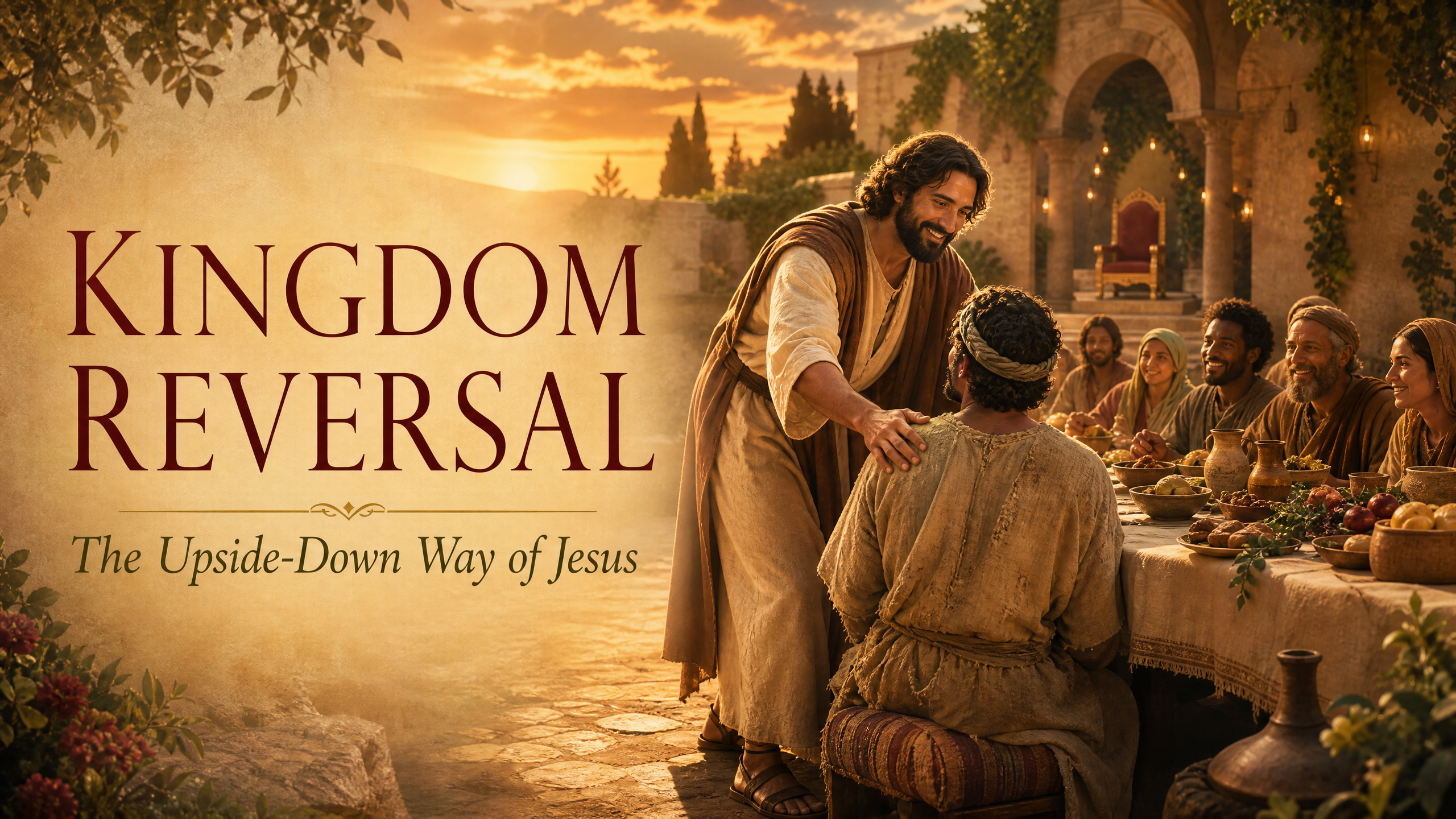
Core Texts: Luke 14; Luke 18; Matthew 20
Theme: Jesus flips human expectations, inviting us into a Kingdom where the low are lifted, the proud are humbled, and grace rewrites the story.
When Everything You Expected Gets Turned Upside Down
Life has moments that flip the script. An underestimated student becomes the top performer. A predicted loser wins the championship. We love these stories because they challenge our assumptions and remind us that appearances deceive.
Jesus teaches that the Kingdom of God is built on these reversals – not accidental ones, but intentional ones. The Kingdom does not operate like the world. It flips the ladder. It reorders the table. It rewrites the definitions of greatness, honour, and success.
The Last Become First, the Humble Become Lifted
Jesus first told the parable of the Pharisee and the Tax Collector. Two men go to the temple to pray. One stands tall, confident in his religious résumé. He lists his achievements, compares himself to others, and believes he deserves God’s approval.
The other man stands far off, unable even to lift his eyes. He knows his failures and his need. He simply asks for mercy.
Jesus said it was the humble man who went home justified. The reversal is startling: the one who looked righteous was empty, while the one who looked unworthy was accepted (Luke 18:9–14).
Next, Jesus told of a Great Banquet. A host invites the expected guests – the influential and respected – but they all decline, too busy and self-important.
So the host invites the unexpected: the poor, crippled, blind, and forgotten. They fill the hall. The reversal is profound: those who assumed they belonged missed out, while those who assumed they didn’t belong were welcomed (Luke 14:15–24).
Finally, Jesus told of the First and the Last. A master hires workers at different times. Some work exhausting hours in the heat; others work only briefly before sunset.
Yet the master pays everyone the exact same wage. When the early workers complain, he replies, “I choose to be generous.” The reversal disrupts human logic: those expecting more received the same, and those expecting little received abundance. The Kingdom is grace-based, not merit-based (Matthew 20:1–16).
The Kingdom Runs on Grace, Not Status
These parables reveal four disruptive truths about the upside-down way of Jesus.
- God lifts the humble. The Pharisee had performance; the tax collector had repentance. Humility is the doorway to grace.
- God invites the overlooked and the unexpected. The banquet is filled with people society ignores. God’s Kingdom is not reserved for the impressive – it is open to the willing.
- God rewards according to grace, not human fairness. The workers received the same wage because the master is generous. Grace is not earned; it is given.
- God sees differently than we do. We see status, achievement, appearance, and reputation. God sees humility, surrender, love, and faithfulness. The Kingdom reverses human categories.
Where Do You Need a Kingdom Reversal?
These parables invite reflection. Where have you trusted your performance instead of God’s mercy? Where have you assumed you belong, losing your spiritual hunger? Or perhaps you feel unworthy and need to accept God’s invitation. Have you resisted God’s generosity because it didn’t feel “fair”?
The Kingdom is not about climbing; it is about kneeling. It is not about earning; it is about receiving. It is not about status; it is about surrender.
Reflection Questions
- When are you most tempted to rely on your “religious résumé” rather than God’s mercy?
- How does the master’s generosity to the late workers challenge your sense of fairness?
- Who are the “unexpected guests” in your community that God might be asking you to welcome?
Prayer Points
Lord, flip the places in my heart where pride has settled. Father, lift the parts of me that feel unworthy and help me receive Your grace. Holy Spirit, teach me the upside-down way of Jesus, where the last become first.
Your Invitation: One Step Down, One Step Toward Grace
Choose one act of humility this week: apologize first, serve someone quietly, listen without defending, or celebrate someone else’s success.
Then choose one act of grace: forgive someone fully, include someone who is often overlooked, or give generously without expecting anything in return.
Humility opens the door. Grace fills the room.
Leave a Reply