Series: The Making of a King – The Life of David
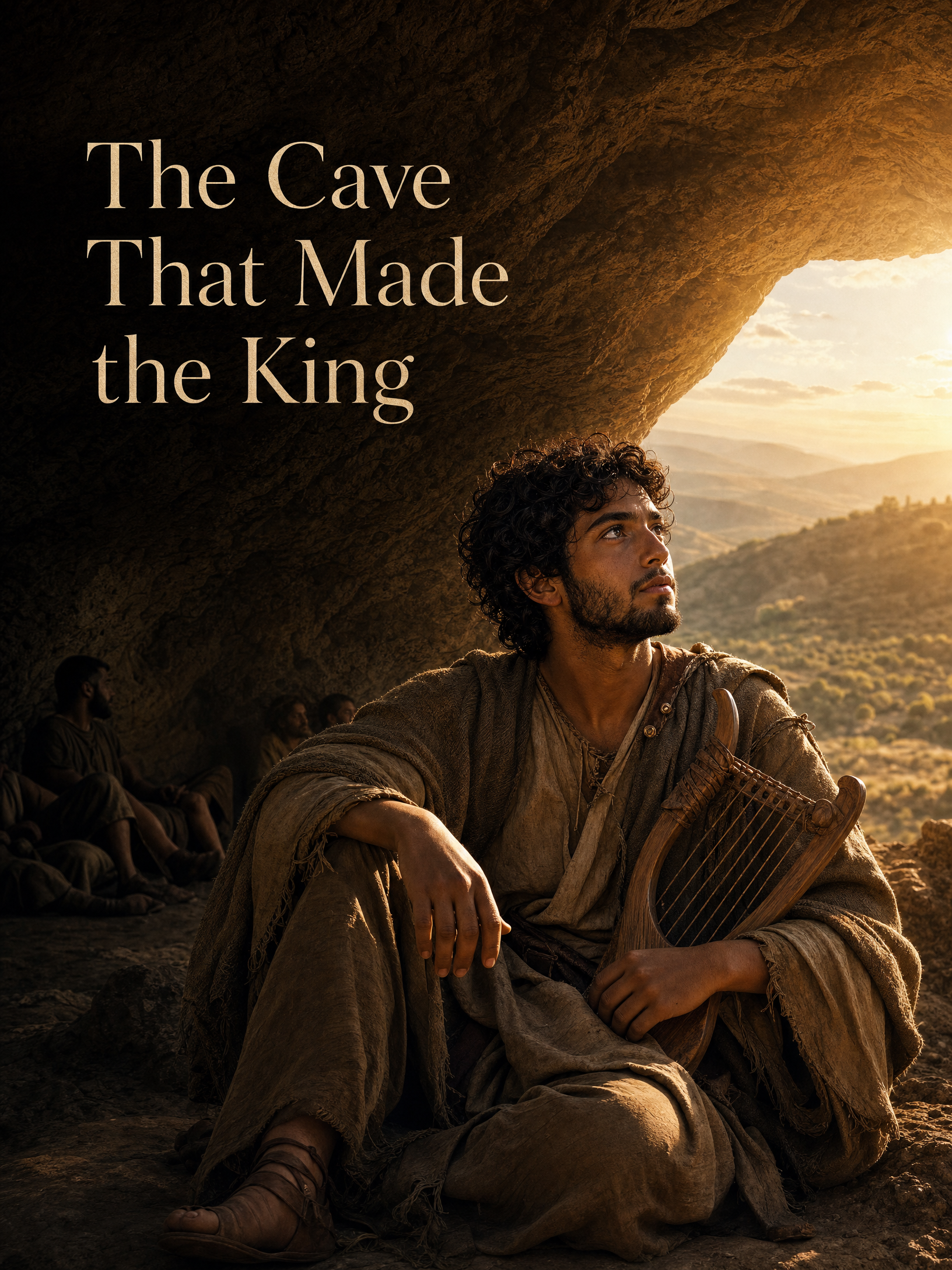
By this point in the story, David isn’t just unseen anymore. He is now very visible that he is now being hunted. The same king he once played music for now wants him dead. And in the middle of running for his life, alone and afraid, David ends up hiding in a cave.
What happens next is one of the most overlooked turning points in his whole life. The cave doesn’t just hide David. It hands him his first real leadership assignment – leading over four hundred men nobody else wanted.
The Scene: 1 Samuel 21–22
David’s flight begins in desperation. He runs to Nob, lies to the priest Ahimelech out of fear, and takes bread and a sword just to survive (1 Samuel 21:1–9). He runs further, to Gath, into enemy territory, and has to fake madness in front of a Philistine king just to escape with his life (1 Samuel 21:10–15). This isn’t a hero’s journey at this point. It’s survival, one desperate decision at a time.
Then comes the cave:
“David departed from there and escaped to the cave of Adullam… And everyone who was in distress, and everyone who was in debt, and everyone who was bitter in soul, gathered to him. And he became commander over them. And there were with him about four hundred men.” (1 Samuel 22:1–2)
Read that list again. Distressed. In debt. Bitter in soul. These are not the men you’d hand-pick for an elite unit. This is the overflow of a broken society. People with nowhere else to go, and somehow, this is exactly who God puts in David’s hands first.
Learning to Lead People Nobody Else Wanted
Pause to think on how strange this actually is. David has just been anointed as Israel’s future king. You’d expect his first command to be something impressive…maybe leader of a battalion of skilled soldiers, or a position of honor in Saul’s court. Instead, his first taste of leadership is four hundred men defined by exactly the kind of pain David himself was living through.
That’s not a coincidence. David could lead these men well because he wasn’t leading them from above. He was leading them from inside the same distress they carried. He knew what it felt like to be rejected by his own family. He knew what it felt like to be hunted by someone who should have protected him.
This becomes the seed of something we see all through the rest of his life: a king who could write “the LORD is near to the brokenhearted” (Psalm 34:18) because he had been there himself, in a cave, with nothing but a band of outcasts and a God who hadn’t left him.
Again….The Cave Wasn’t Wasted Time
It would be easy to read this chapter as a low point and move on quickly. But look at what actually gets built here. Four hundred discouraged men become, over time, David’s mighty men – the same core group that will later fight beside him, defend his kingdom, and become some of the most loyal warriors in Israel’s history.
None of that would have existed without the cave. David didn’t get his future army handed to him fully trained. He built it, slowly, out of people everyone else had given up on. Leadership like that isn’t learned in a palace. It’s learned in the hard, unglamorous work of gathering broken people and giving them somewhere to belong.
Pastoral Insight: God Often Builds Leaders Out of the Rejected, for the Rejected
There’s a pattern worth naming here. David’s own pain didn’t disqualify him from leadership – it qualified him for a very specific kind of leadership. He could gather the distressed because he understood distress. He could lead the bitter in soul because he’d tasted bitterness himself.
If you’ve ever felt like your own hard seasons were wasted, or like your wounds only ever cost you something, David’s cave says otherwise. God doesn’t just heal what you’ve been through – He sometimes uses it, later, to help you lead other people through the very thing that once nearly broke you.
Reflection Questions
- Have you ever found yourself surrounded by “people who are going through the things you are going through or have been through” – and realized you were meant to lead them, not just survive alongside them?
- What pain in your own story might God be preparing to use for someone else’s benefit?
- Are you willing to let your hardest season become the very thing that equips you to help others in theirs?
A Prayer From the Cave
Lord, thank You that You meet me even in the places I never wanted to be. When I feel hunted, hidden, or forgotten, remind me that You are building something here too. Use my own distress to make me tender toward other people’s pain, instead of hardened by my own. Help me see the broken people around me the way You see them – not as a burden, but as the very ones You’re calling me to lead, love, and walk alongside. Amen.
Closing Thought for the Episode
David didn’t ask for the cave. He didn’t choose the four hundred men who found him there. But it’s in Adullam that his leadership was actually born.
If you’re in a cave season right now, surrounded by people as discouraged as you feel, take heart. This might not be exile. It might be the very place where God is quietly building what comes next.
Leave a Reply